Showing posts with label chickpeas. Show all posts

Wednesday, March 20, 2013

Sweet (Secretly Bean-y) Spreads


Yes, you read that right: Sweet. Bean. Spreads.

I recently read Vegan for Life, an overview of vegan nutrition written by two registered dietitians.  It was a tremendously helpful book, and one of the most important messages I took from it was that I'm probably not getting enough protein!
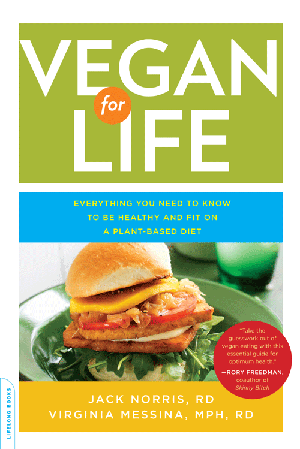
Image via TheVeganRD.com.
But, to be fair, I suspect that I wasn't getting enough before I went vegan, either--as someone who ate very little meat, few beans, and a scattering of dairy products, how could I? But now I know that the daily protein recommendation for women is around 45 grams (more if you're more active) and that my default vegan diet was leaving me as many as 10 grams short per day.

Moreover, the Vegan for Life authors recommended getting most of one's protein through legumes like peanuts, peas, and beans. Peanut butter? Oh, yeah, check! Peas? Sure, I can add those to a lot of dishes--check! Beans? Ummmm, that's harder. I get sick of beans--beans on salads, beans in pasta sauce, beans on tortillas, beans in curries and soups, beans for every meal, beans in and coming out of my ears!
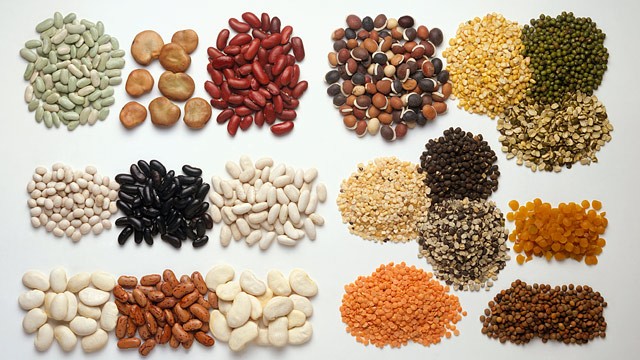
Image from ABCNews.go.com's nice little article about vegetarian protein sources.  (Well, it's nice until they include beef. But I'll take it.)

So what to do? Well, I bought some protein powder for smoothies, learned how to make seitan (more on that later!), and started thinking of ways to sneak beans into my diet.

Thus began my new love affair with bean-based sweet dips and spreads. It sounds weird, I know, but with a good food processor and a can of beans--particularly the miraculously creamy great northern/navy bean--you can get the creamy, rich texture so often associated with butter-based frosting. And you get it with much less fat and more iron and protein than frosting can give!

Fudge dip! (These little containers never last very long . . .)

First, I tried the fudge dip found in Everyday Happy Herbivore (which is pretty much my favorite cook book ever). This stuff is incredibly tasty when spread on a whole wheat tortilla, multigrain bread, or a rice cake. AND it's low-calorie (less than 50 per serving, according to my calorie counter). AND it's full of protein. AND it satisfies my crazy chocolate addiction.

Mmmm, freshly processed goodness. Don't forget to lick the bowl!

Two notes on this recipe: 1) In my opinion, using navy beans is absolutely vital. The cannellini bean version is okay, but the navy beans are much smoother and have a milder flavor. 2) I always make the variation that includes peanut butter. Yeah, it adds fat, but just a tablespoon or two contributes a lot of richness and helps you get away with using less sugar!


More recently, I tried this chocolate chip cookie dough dip from Chocolate Covered Katie because . . . Wait, does anyone really need an excuse to eat raw cookie dough? That's pretty much a gimme.

Cookie dough dip! (Or raw vegan cookie dough. Or whatever you have to call it to make it okay for yourself.)

The brown sugar is really what makes cookie dough taste like cookie dough, and the same is true for this dip! I would definitely use brown sugar as your sweetener if you have it on hand. Also, this is a very forgiving recipe because it doesn't have to be baked, so feel free to make it to taste. And while it's not exactly low-calorie (my version clocked in at over 65 calories per tablespoon), I could still justify walking around my apartment licking it off the spoon as an after-dinner treat!

It's okay on bread, better on rice cakes, and best when eaten alone!
The moral of this story is that I still love beans, but sometimes I like my beans to be seen but not tasted.

Also, you can never trust a vegan: we will hide beans (or kale or quinoa) in everything.

Friday, February 15, 2013

Here Comes the Sun: Tunisian Vegetable Stew from the Moosewood Restaurant


"And all was light": That about sums up my feelings about this golden-hued Tunisian Vegetable Stew from Moosewood Restaurant Cooks at Home. This was one of the dishes I started making last summer that made me think that going vegan wouldn't be so impossible after all. For all its humble ingredients and simple cooking method, it was revelatory.


One of the first things I discovered about eating vegetarian or vegan is that trying to emulate meat-based dishes will usually leave you disappointed. It's far better to look for new recipes and dishes that you've never tried before, dishes that make vegetables shine on their own instead of warping them into flavors they don't naturally have.

This African-style stew is a perfect example of this. This is what happens when you take fresh, healthy vegetables; cook them properly; and spice the hell out of them: satisfying, flavorful magic.


This recipe requires some chopping and some waiting as each round of ingredients softens, but, really, as far as soups go, this one is incredibly low maintenance and pretty quick to knock off. (I won't repost the recipe here because I follow the recipe linked above very closely, with the exception of leaving out the currants.)

What makes this stew "Tunisian"? Well, I'm obviously no expert on African cooking, but all of the spices (cayenne, turmeric, and coriander) are common to Indian cooking, except for the cinnamon. I know, I know, it sounds crazy--cinnamon in a savory dish?--but it adds a subtle, sweet, exotic fragrance to the otherwise spicy, tomato-rich sauce that makes it addictive. You can't help but want to eat more, and more, and more of the stuff.

Until, of course, it fills you up. Which it does admirably, especially at only . . . (wait for it) . . . 150 calories per cup serving. That's right, folks, you can easily go in for seconds on this one. I tend to make it on Sundays and eat it all week at work for lunch. I've tried it with rice and pita bread, but so far I like it best with a hunk of cornbread. (The dairy-free variety, of course!)


Also, can I just say that cabbage is a shockingly underrated vegetable. It plays so nicely with spicy flavors, and it's filling and nutritious, and coleslaw exists, and . . . Wait, I'll stop there.  It definitely deserves an ingredient profile of its own!

Saturday, February 9, 2013

Ingredient Profile: Chickpeas


I am not exaggerating when I say that I feel romantically toward chickpeas.

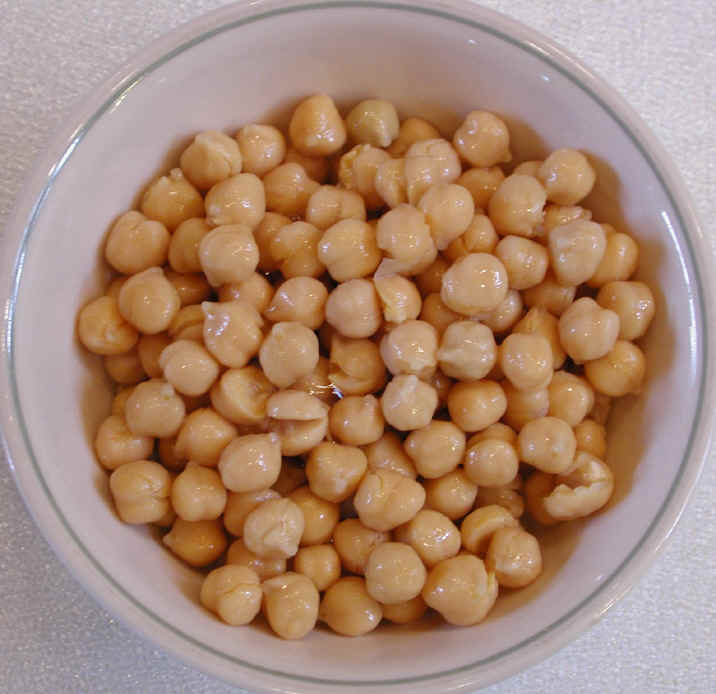
Image from all-creatures.org, which has a lovely write-up of chickpeas and their nutritional content. 

For a long time, my only experience with the common garbanzo bean was seeing their strange, lumpy, beige-ness staring at me from salad bars. I thought they looked like pelleted cellulite, and I was not into it.

The first time I felt my heart flutter at the sight of a chickpea was when I discovered Indian food in college. Chana masala (chickpeas in a curried tomato sauce) and chole saag (chickpeas in a rich spinach sauce) are perhaps the best tasting foods in the world, and you can make a lot of curried dishes with chickpeas at home that are simple, filling, and voluminous. (Spicy chickpeas and dill is a personal favorite.) 

I've also included chickpeas in vegetarian chili and spicy African stews with great success. And in a pinch, they perform admirably as part of an Italian-style pasta dish when sauteed with veggies in a little bit of oil until their skins begin to burst; just throw some vegan tomato sauce on top and add to a whole grain pasta of your choice. 
Oddly enough, Bush's really are the best canned chickpeas I've tried, thought most organic brands are equally delicious. 
Furthermore, chickpeas are great on top of a quick salad or even as a snack; I have definitely been known to scoop out a half cup so I can eat them plain with my fingers. They’re slightly nutty and salty straight from the can, with a tender, crumbly texture. They’re capable of taking a backseat to strong spicy flavors, the tangy freshness of tomatoes, or the acidity of vinegar or Dijon. Basically, they’re like a really fantastic character actor, capable of stepping up and stealing a scene when you need them to, or hanging back and supporting your other flavors in their Oscar-bid roles.

More than anything else in my kitchen, chickpeas are my go-to vegan protein of choice, full of protein and iron, satisfying and adaptable.

Perhaps such a ubiquitous food doesn't need an ode, but isn't that the whole point of a blog like this? To simultaneously celebrate and be grateful for those foods that make living the life we’d like to live possible?

Chickpeas are my Meryl Strep, and I will always give them all of my newbie vegan awards.

Image from Thinkprogress.org. Yayyy Meryl!

Monday, February 4, 2013

The Humdrums: Roasted Garlic Hummus


I'm just going to get it over with and admit it: this post is a cliche. A vegan blogger "experimenting" with hummus, that most hippie-ish of all hippie foods? That bland protein paste that so many people insist on smearing on a pita and calling a "meal"? That beige staple of the Mediterranean and patron saint of sad veggies wraps everywhere? It has been done. A lot. 


But it is a starting place, and it was the very first thing I decided to make when I chose to start veganing it up.

Also, when I don't have hummus, I'm lost. Snacks and quick-grab lunches become well-nigh impossible. Hummus is always there for you, always ready to go. And if you can't be with the tzatziki sauce or guacamole or (let's face it) veggie cream cheese spread that you love, good old friend-zoned hummus is always there for you. Maybe not in your heart, but, you know, he'll always help you move a couch.

Not only was I out of hummus a couple of weekends ago, but my favorite grocery store hummus, Sabra's roasted garlic, hadn't been on sale for a few weeks, which meant that I was considering shelling out nearly $5.00 for 12 ounces of the stuff. The below recipe probably cost me less than $3.00 to make, AND I got about twice as much hummus out of it than I would buying it pre-made.

A basic hummus recipe is a lot easier than people think: chickpeas, tahini, olive oil, salt, garlic, and lemon juice, meet my good friend Mr. Food Processor. That's. About. It. Even the exotic-sounding tahini is just unsweetened sesame seed paste, which happens to taste a little tangy and almost spicy. (If you ask a shelf stocker, you can find it at most grocery stores without too much trouble.)


And now for an admission: the first time I made this particular roasted garlic hummus recipe, I misread the recipe and made it wrong--super wrong--and really didn't care for it. Naturally. It was way, way  out of proportion. The second time around, I treated the recipe right and it was pretty damn tasty. (Though it did give me atomic garlic breath that was vanquished only by a good tooth brushing.) 

Ideas for the future:
  • Blend a batch with dried red pepper flakes, a little chili olive oil, and maybe even a dash of chili powder or cumin to eat with chips and salsa. 
  • Blend in a little bit of red wine vinegar, kalamata olive pieces, and maybe even some fresh spinach for a pita-ready Greek-style hummus.
  • Edamame hummus. THAT IS A THING AND IT IS DELICIOUS. 
Basically, this recipe, like hummus in general, really welcomes variations and making it to taste. And it was easy to make--the hardest part by far was cleaning those damn nooks and crannies at the bottom of my food processor. Why do they make them like that?!

Note: I have had this post sitting in my drafts for three weeks. Veganism is going well--returning to blogging . . . now that's going to take some dedication!